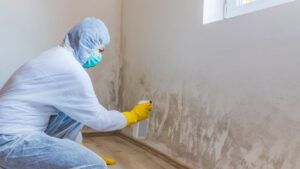
If your house was built before the mid-1980s, there is a real chance asbestos is hiding in the insulation, flooring, ceilings, or pipe wrap you look at every day. Builders used it widely for most of the 20th century because it was cheap, durable, and fire resistant. Left alone and intact, it is usually not an immediate danger. Disturbed during renovation or demolition, it becomes a health problem you do not want to manage on your own.
If your older Spokane, WA home has a renovation on the horizon, call (509) 202-6919 for a scoping conversation with an EPA AHERA Certified inspector.
A Brief History of Asbestos in Residential Construction
Asbestos is a group of naturally occurring mineral fibers that were used in residential and commercial construction for decades because of their heat resistance, tensile strength, and low cost. Common use in American homes peaked from the 1930s through the 1970s. The EPA banned certain uses beginning in the late 1970s and progressively through the 1980s.
The rule of thumb most inspectors use is 1980. If your home (or a specific component in it) predates 1980, assume it could contain asbestos until a lab says otherwise.
Where Asbestos Is Typically Found
Insulation
Vermiculite insulation (particularly brands sourced from Libby, Montana) in attics and wall cavities was commonly contaminated with asbestos. Pipe wrap insulation on heating and hot water lines is another classic location.
Ceilings
Popcorn and acoustic ceiling texture applied before the mid-1980s frequently contains asbestos. Textured plaster from earlier eras sometimes contains asbestos in the finish coat.
Flooring
9-inch-by-9-inch vinyl floor tile is the classic residential asbestos indicator. Floor tile mastic often contains asbestos independently of the tile itself.
Walls
Drywall joint compound and texture sprays from earlier eras sometimes contain asbestos. The drywall panels themselves typically do not.
Health Risks
Long-term or repeated inhalation of asbestos fibers has been linked by the EPA, OSHA, and the World Health Organization to mesothelioma, lung cancer, and asbestosis. Those conditions typically develop over decades of exposure. Brief, incidental contact with intact material in a home setting is generally low-risk; the concerning exposures occur during renovations, demolitions, or occupational work where significant amounts of fiber are released.
The Inspection and Testing Process
An asbestos inspection is a systematic visual survey of the building’s components, focused on identifying suspect asbestos-containing materials. Samples go to an accredited laboratory for analysis (Polarized Light Microscopy is the standard method). You receive a written report that documents the sample locations, chain of custody, lab results, and interpretation.
See our Asbestos Inspection service page for the full scope.
What to Do With the Results
If No Asbestos Is Detected
You have written documentation that the sampled materials do not contain asbestos. Proceed with your renovation or disclosure confidently.
If Asbestos Is Detected in Materials in Your Work Area
Hire a licensed asbestos abatement contractor. These are specialized firms trained to handle asbestos, package it, transport it, and dispose of it according to federal and state law. Enviro Consulting Services does not perform abatement — keeping inspection independent from any subsequent work gives you an unbiased baseline report.