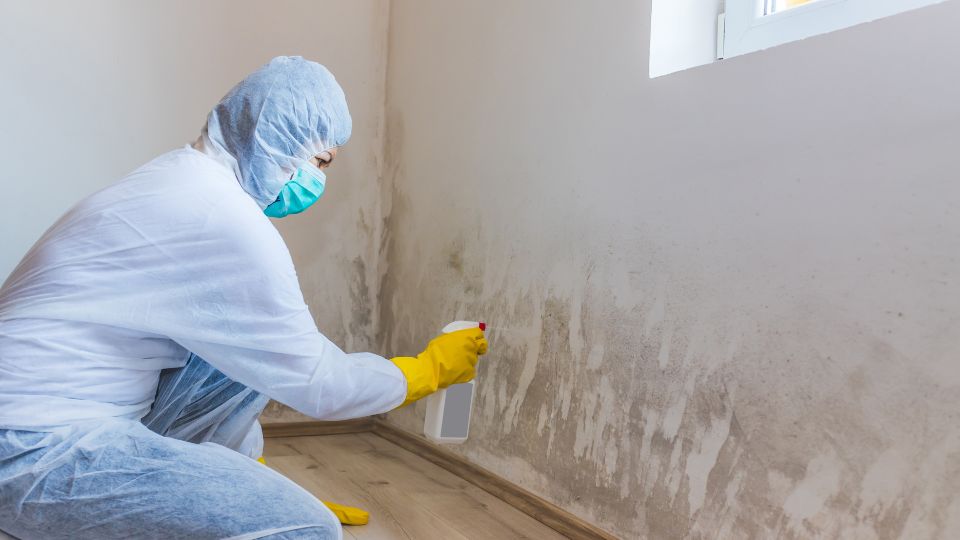
You smell something musty in the basement. The home you are about to buy has a history of water damage. An insurance claim came back asking for documented mold assessment. You search online and hit two similar-sounding services: mold inspection and mold testing. They are not the same, and the right call depends on the situation.
If you want a scoping call with a Certified Mold Inspector to determine which makes sense for your situation, call us at (509) 202-6919.
What Is a Mold Inspection?
A mold inspection is a visual and moisture-based evaluation of a property. A qualified inspector walks the home, looks in the areas most likely to develop mold (basements, crawl spaces, attics, bathrooms, under sinks, around windows, near HVAC returns), and uses calibrated moisture meters to document the conditions that do or do not support active growth.
The inspector produces a written report. The report identifies visible growth (if any), documents moisture readings, locates suspect areas for potential hidden growth, and recommends next steps. A mold inspection is non-destructive. The inspector does not cut open walls, pull up carpet, or tear out finishes.
Visit our Mold Inspection service page for the full scope.
What Is Mold Testing?
Mold testing is laboratory analysis of samples collected during or after an inspection. The lab analysis produces data that a visual inspection alone cannot: species identification, spore concentrations, and comparisons to outdoor baselines.
Types of Mold Samples
- Air samples. An air pump pulls a measured volume of air through a spore trap. The lab identifies and counts spores by genus. Answers: is there elevated airborne mold activity?
- Surface samples. Swabs or tape-lift samples collected from visible suspect growth. Answers: what is the thing I can see?
- Bulk samples. Small pieces of building material sent for analysis when growth is embedded in the material.
- Clearance air testing. Air samples collected after a licensed remediation contractor completes corrective work. Answers: did the corrective work achieve its goal?
Visit our Mold Testing service page for the full scope.
How They Work Together
In practice, most mold work combines both services. An inspection finds the suspect areas and documents the moisture conditions. Testing confirms what the inspector suspected, identifies species, and produces lab-backed documentation.
Comparison Table
| Factor |
Mold Inspection |
Mold Testing |
| What it is |
Visual and moisture-based walkthrough |
Lab analysis of collected samples |
| Output |
Written report with findings |
Lab results with species and concentration |
| Typical time |
1-3 hours on site |
1-2 hours (sampling only) |
| Turnaround |
24-48 hours for report |
3-5 business days for lab |
When You Only Need an Inspection
- Visible mold growth in an obvious location from an obvious source.
- A pre-purchase walkthrough on a property with no known water damage history.
- A homeowner’s periodic health check on a home with no active concerns.
When You Need Testing
- There is a hidden or unclear source.
- A musty odor persists with no visible growth.
- An insurance claim, lawsuit, or real estate negotiation requires lab-backed data.
- A pre-purchase scenario requires documented species and concentration data.